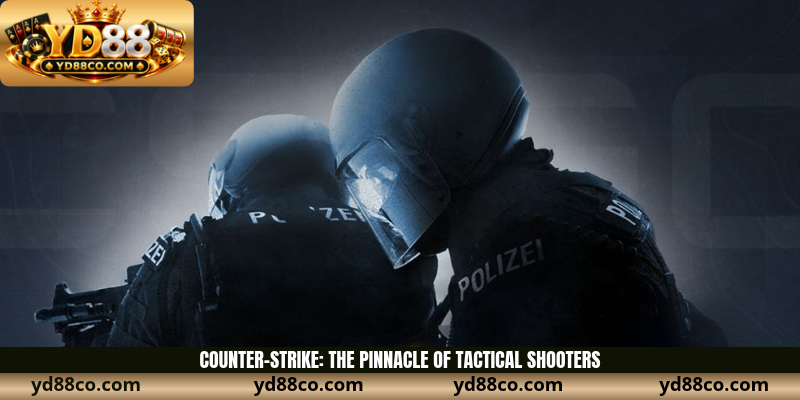
Very few franchises hold a candle to the historical impact and enduring popularity of counter-strike. Originally born in 1999 as a community-created modification for Half-Life by Minh Le and Jess Cliffe, the game quickly captured the imagination of computer club gamers worldwide.
Acquired by Valve Corporation, the franchise evolved through pivotal iterations: Condition Zero, Counter-Strike: Source, Counter-Strike: Global Offensive (CS:GO), and now Counter-Strike 2 (CS2). Today, yd88, a premier online gaming platform in Malaysia, takes a closer look at why this title continues to dominate the global scene.
The core philosophy: simplicity meets infinite depth
At first glance, the premise of counter-strike appears delightfully straightforward. Two teams of five players—the Counter-Terrorists (CTs) and the Terrorists (Ts)—compete over a series of rounds. The Terrorists aim to plant a bomb (the C4) at designated bomb sites (A or B) or eliminate all Counter-Terrorists. Conversely, the Counter-Terrorists must prevent the bomb from being planted, defuse it if it is armed, or eliminate all Terrorists before the timer runs out.
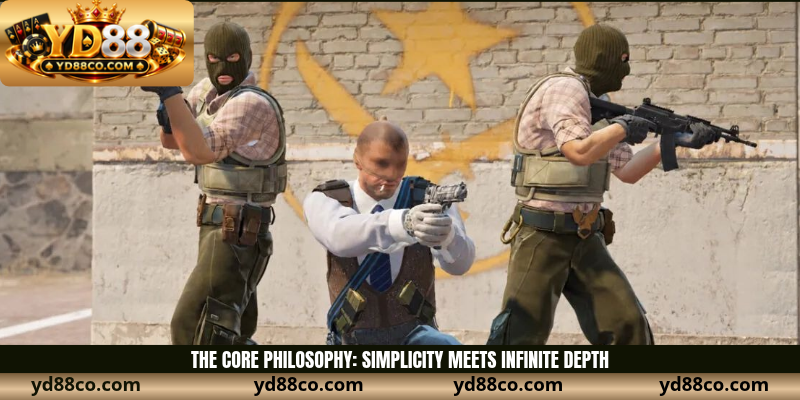
However, beneath this intuitive objective lies a game of astounding tactical complexity. Unlike many modern hero shooters that rely on character abilities, cooldowns, or ultimate powers, Counter-Strike operates strictly on a level playing field. Every player starts with equal potential. Victory depends on raw shooting mechanics, movement discipline, map knowledge, game sense, and effective team communication.
Understanding the dynamic counter-strike economy system
One of the most defining features of game highlighted by analysts at yd88 is its dynamic economy system. Players earn in-game cash based on their individual and team performance at the end of each round. Kill rewards, bomb plants, defusals, and win/loss streaks directly influence a team’s purchasing power.
Counter-strike pistol rounds and full buy strategies
The opening round of each half forces players to compete with a modest budget, using basic sidearms and minimal armor. Winning the pistol round grants a substantial economic advantage for subsequent rounds, allowing teams to unlock primary rifles like the iconic AK-47 for Terrorists or the M4A4/M4A1-S for Counter-Terrorists.
Managing eco rounds and force buys in counter-strike
When funds are low, a team deliberately executes an “eco round”—buying minimal equipment to preserve cash for a full buy later. Conversely, a “force buy” is a high-risk strategy where a team spends their remaining funds on submachine guns or upgraded pistols, attempting to disrupt the opponent’s momentum despite an equipment disadvantage.
Managing this economy demands constant communication and collective decision-making, as a single ill-advised purchase can derail a team’s momentum for multiple rounds.
Masterclass in counter-strike gunplay, movement, and utility
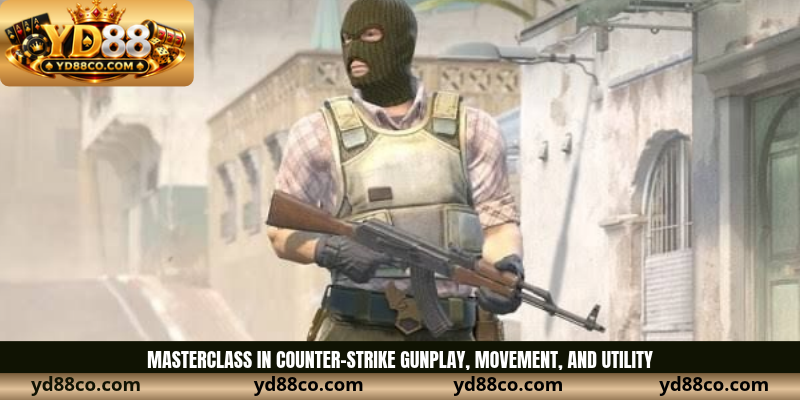
Game has long set the benchmark for shooting mechanics in the first-person shooter genre. Weapon handling in counter-strike requires patience and practice due to two critical factors: movement inaccuracy and recoil patterns.
Counter-strike recoil control and counter-strafing techniques
Guns do not fire in a simple point-and-click fashion while moving. To hit a target accurately in counter-strike, a player must be standing completely still. The technique known as counter-strafing—tapping the opposite movement key to bring the character to an immediate halt—is fundamental to winning duels. Furthermore, every weapon possesses a specific recoil spray pattern. Veteran players memorize these patterns, pulling their mouse down and in opposing directions to compensate for bullet rise.
Strategic tactical utility in counter-strike matches
Firepower alone rarely guarantees success at higher levels of play. Tactical utility acts as the primary tool for territorial control:
- Smoke grenades: Block vision, obscure sniper sightlines, and allow teams to cross open areas safely.
- Flashbangs: Temporarily blind enemies, enabling attackers to execute onto sites or defenders to break aggressive pushes.
- HE grenades: Deal direct explosive damage to soften up entrenched targets.
- Molotovs / incendiary Grenades: Deny territory by creating pools of fire, forcing opponents out of defensive positions.
Proper coordination of utility—throwing flashes over walls for teammates or lining up smoke grenades from across the map—is what separates casual players from tactical masters.
Iconic counter-strike map design and competitive layouts
Map design in game is widely studied across the game development industry. Maps are meticulously crafted to provide balanced choke points, sightlines, and rotation times for both sides.
Classic counter-strike maps: Dust II, mirage, and inferno
- Dust II: Arguably the most famous map in FPS history. Featuring a clean “three-lane” layout, Dust II emphasizes direct aiming duels and intuitive rotations.
- Mirage: A tactical staple in competitive play that rewards disciplined utility execution and strong mid-map control.
- Inferno: Characterized by tight corridors, banana control contests, and chaotic bomb site holds that test team synergy under pressure.
Modern competitive rotation: Nuke and vertigo
Vertical maps like Nuke and Vertigo challenge conventional horizontal positioning, forcing players to rely heavily on audio cues, multi-level map awareness, and clear communication.
The global counter-strike esports phenomenon
Game played a vital role in building the modern esports infrastructure. From local LAN tournaments in the early 2000s to massive arena events like the Valve-Sponsored Majors, Intel Extreme Masters (IEM), and ESL Pro League, the franchise regularly draws millions of concurrent viewers worldwide.
As observed by yd88 Malaysia, legendary plays—such as clutching a 1v4 scenario with an AWP sniper rifle under intense pressure—have generated unforgettable moments in digital sports history. The transparent spectating system, combined with clear objective-based gameplay, makes counter-strike exceptionally thrilling to watch even for viewers who do not play the game regularly.
The next generation: The era of counter-strike 2
With the launch of game, Valve introduced a major technological leap powered by the Source 2 engine. Featuring sub-tick architecture for precise input responsiveness, dynamic volumetric smoke grenades that react to light and bullets, and overhauled visual clarity, the game has refreshed its foundational design while honoring its competitive roots.
The transition to CS2 ensures that the franchise remains at the forefront of competitive gaming for the next decade, appealing to long-time veterans and attracting a brand-new generation of tactical shooter enthusiasts.
Conclusion
Counter-strike stands as a monumental testament to pure, skill-based game design. By rejecting gimmicks and prioritizing precise mechanics, tactical depth, and economic strategy, it has maintained its status as the pinnacle of competitive first-person shooters for over two decades. Whether you are aiming for crisp headshots, coordinating flawless team executes, or following esports coverage on yd88, game offers an unmatched competitive thrill that continues to shape the gaming world.
